-
- All Centrifuges
- Benchtop Centrifuges
- Floor-Standing Centrifuges
- Refrigerated Centrifuges
- Microcentrifuges
- Multipurpose Centrifuges
- High-Speed Centrifuges
- Ultracentrifuges
- Concentrator
- IVD Products
- High-Speed and Ultracentrifuge Consumables
- Centrifuge Tubes
- Centrifuge Plates
- Device Management Software
- Sample and Information Management
-
- All Pipettes, Dispensers & Automated Liquid Handlers
- Mechanical Pipettes
- Electronic Pipettes
- Multi-Channel Pipettes
- Positive Displacement Pipettes & Dispensers
- Pipette Tips
- Bottle-Top Dispensers
- Pipette Controllers
- Dispenser & Pipette Accessories
- Automated Pipetting
- Automation Consumables
- Automation Accessories
- Liquid Handler & Pipette Services
Read more
Read less
Our Vision
Our mission “to improve human living conditions” requires us to positively transform the Eppendorf Group to operate safely within the planetary boundaries and respecting humanity: we shall cut down our carbon emissions wherever possible, minimize the use of natural resources, and improve human well-being throughout our value chain.
This vision is part of our strategic approach to take responsibility and contribute to a sustainable development.
Read more
Stakeholder-, impact-, and success-oriented
Sustainability along the entire value chain
The basis of the strategic framework is a combination of integrating different perspectives on 20 responsibility topics relevant for Eppendorf: The dialog with various stakeholders, a data-based determination of our environmental and social footprint using an impact analysis and a success-oriented assessment.
Our contribution to the Sustainable Development Goals (SDGs)
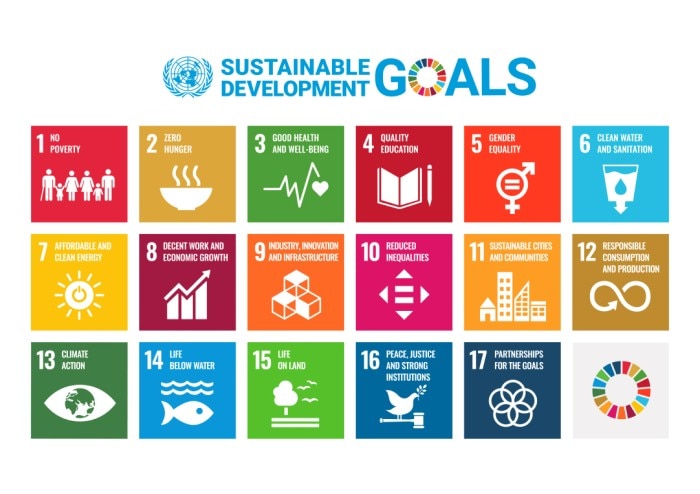
The 17 Sustainable Development Goals (SDGs) and their 169 sub-goals serve as tasks and instructions for action for governments, companies, cities and civil societies worldwide. They were adopted by the 193 member states of the United Nations (UN) in September 2015 and define the economic, social and ecological dimensions of sustainable development. At Eppendorf, we support the implementation of the SDGs and aim to make a significant contribution to achieving the goals through our business activities.
In preparing our materiality analysis, we also analyzed our contribution to the SDGs, taking into account the entire value chain. With the Eppendorf Resource Strategy based on circular economy concepts, we are making a decisive contribution to achieving SDG 12, which aims to ensure sustainable consumption and production methods by 2030.

Business Practices
With company-wide codes of conduct, Eppendorf has established standards for employees and suppliers around the world.
Eppendorf considers compliance with legal requirements to be a matter of course. That is why we set standards for ourselves that exceed what is required by law. When joining the company, every employee of Eppendorf SE and its majority-owned subsidiaries in Germany and other countries agrees to comply with the Code of Conduct. This code includes guidelines on how to behave in accordance with the company's ethical standards – for example, when using company resources or with regards to occupational safety.
Eppendorf also ensures certain standards in its supplier relationships. To this end, the company imposes the Code of Conduct for Suppliers.